Patients
Intake Forms


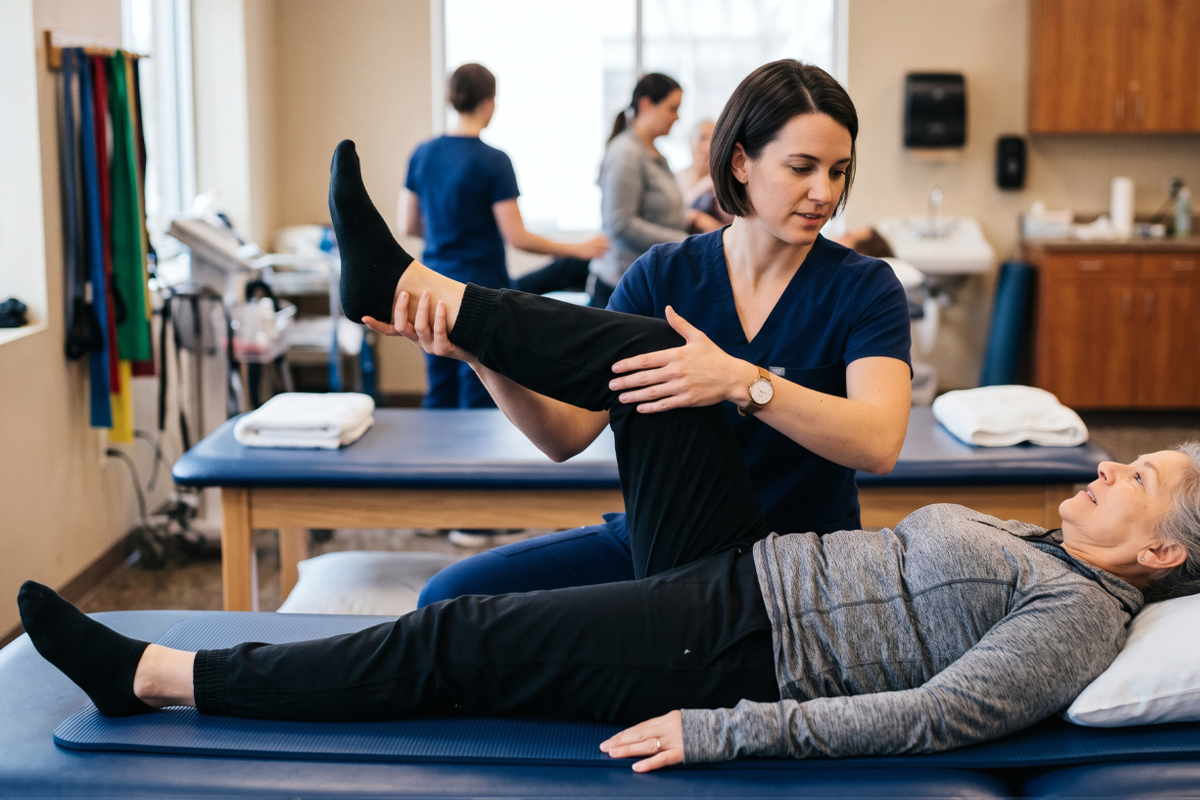 Hip Pain Holding You Back? Find Relief & Move Better
Hip pain can affect people of all ages and activity levels. Whether you are an athlete dealing with a sports injury, an active professional experiencing stiffness after sitting at a desk, or an older adult managing arthritis, hip pain can make everyday activities more difficult. Walking, climbing stairs, getting in and out of a car, and even sleeping comfortably can become challenging when your hips are not functioning properly.
As November brings colder temperatures to New Jersey, hip pain and stiffness can become even harder to manage, making everyday movements more uncomfortable and symptoms sometimes more unpredictable. For people already dealing with arthritis, previous injuries, or limited mobility, colder weather can make staying active feel like an uphill battle.
At Scerbo Physical Therapy & Sports Rehabilitation, in Edgewater, New Jersey, we help patients manage hip pain resulting from a wide range of conditions, including arthritis, muscle strains, falls, sports injuries, and postural imbalances. Because every patient experiences pain differently, we develop individualized treatment programs designed to address the underlying cause of discomfort, improve mobility, and help patients return to the activities they enjoy.
1. Hip Pain Caused by Arthritis: Arthritis commonly causes hip pain, particularly in middle-aged and older adults. Osteoarthritis, the most common form, occurs when the joint’s protective cartilage gradually wears down. This can cause the bones to move against one another with less cushioning, resulting in pain, stiffness, and reduced mobility.
Symptoms include:
Our physical therapist can help patients manage osteoarthritis symptoms and maintain their independence. Treatment may include gentle range-of-motion exercises, strengthening of the muscles surrounding the hip, balance training, and low-impact activities that reduce unnecessary stress on the joint.
2. Hip Flexor Strains and Muscle Injuries: The hip flexors are a group of muscles that help lift your knee toward your chest and bend your hip. These muscles are particularly important for running, jumping, kicking, and climbing stairs.
A hip flexor strain occurs when one or more of these muscles become overstretched or develop small tears. It can happen during sports, sudden changes in direction, sprinting, or other activities that place excessive stress on the muscles.
However, athletes are not the only people affected. Repetitive movements, muscle weakness, and prolonged inactivity can also contribute to hip discomfort.
Common symptoms include:
How physical therapy can help:
Treatment depends on injury severity and your recovery stage. Your physical therapist may recommend activity modification, gentle mobility exercises, progressive strengthening, and movement retraining.
As symptoms improve, your program may gradually incorporate sport-specific exercises or functional movements to help restore strength, coordination, and confidence while reducing the risk of reinjury.
3. Hip Bursitis: Bursae are small, fluid-filled sacs that help reduce friction between bones, tendons, and other tissues. When a bursa becomes irritated, it can cause pain and tenderness around the affected area.
Greater trochanteric pain syndrome commonly causes pain on the outside of the hip. It can involve irritation of the bursa, the gluteal tendons, or both. Although this discomfort is often called hip bursitis, the surrounding tendons are frequently involved.
Symptoms may develop after a fall, increased physical activity, repetitive loading, or prolonged pressure on the affected side.
Common symptoms include:
How physical therapy can help:
Physical therapy often focuses on reducing irritation while improving the strength and function of the muscles that stabilize the hip.
Your treatment plan may include targeted gluteal strengthening, gradual exercise progression, movement modifications, and guidance on sleeping positions or daily activities that may aggravate symptoms.
4. Hip Pain From Sports Injuries and Overuse: Athletes and recreational fitness enthusiasts place repeated demands on their hips. Running, cycling, basketball, soccer, tennis, and weightlifting all require strength, flexibility, balance, and coordination.
When training intensity increases too quickly, recovery time is insufficient, or movement patterns place excessive stress on the joint, hip pain may develop.
Sports-related hip pain can involve muscle strains, tendon irritation, labral injuries, or other joint conditions. The hip labrum is a ring of cartilage that helps stabilize the ball-and-socket joint.
Some patients may also have femoroacetabular impingement (FAI), a condition in which the shape of the hip bones causes abnormal contact during certain movements.
Common symptoms include:
How physical therapy can help:
An individualized sports rehabilitation program can help address strength deficits, mobility restrictions, and movement patterns that contribute to symptoms.
Depending on your condition, treatment may include progressive strengthening, core stabilization, balance and coordination exercises, and sport-specific movement training.
Your physical therapist can also help you modify training loads and develop a gradual return-to-sport plan. Some structural conditions may require additional medical evaluation, so don’t ignore persistent pain, locking, or catching.
5. Falls or Traumatic Injuries: Falls, collisions, and other traumatic injuries can cause hip pain in people of all ages. Effects can range from bruising and muscle strains to more serious injuries involving the bones, ligaments, or joint.
Older adults and individuals with osteoporosis may be at increased risk of a hip fracture after a fall, sometimes even when the impact seems minor.
Common symptoms may include:
How physical therapy can help:
Treatment depends on the injury’s nature and severity. After a serious injury has been evaluated and cleared for rehabilitation, physical therapy may help restore strength, balance, flexibility, and walking ability. Patients recovering from hip surgery may also benefit from a structured rehabilitation program tailored to their surgical procedure and recovery stage.
6. Hip Pain Related to Posture, Prolonged Sitting, or Lower Back Problems:
Modern lifestyles often involve long periods of sitting, whether at a desk, during a commute, or while relaxing at home. Prolonged sitting and limited movement can contribute to stiffness, reduced activity tolerance, and hip discomfort.
Poor movement mechanics, muscle weakness, and repetitive strain may also contribute to symptoms. However, posture alone is rarely the only explanation for persistent hip pain. In some cases, discomfort felt around the hip actually originates in the lumbar spine. Conditions affecting the lower back, including nerve irritation, can cause pain that travels into the buttock, hip, or leg.
Common symptoms include:
How physical therapy can help:
Your physical therapist can evaluate how your hips, lower back, and surrounding muscles work together to identify potential contributors to your symptoms. Treatment may include mobility exercises, core and hip strengthening, movement retraining, and recommendations for regular movement breaks throughout the day.
Occasional muscle soreness after exercise may improve with rest and appropriate activity modification. However, don’t ignore persistent or recurring hip pain, especially when it starts interfering with your daily routine.
Consider scheduling an evaluation if you experience:
Seek urgent medical attention for severe pain after an injury, an inability to bear weight, a hot or swollen hip accompanied by fever, or other symptoms suggesting a serious underlying condition. A proper assessment can help determine whether your symptoms warrant physical therapy or require further medical evaluation.
At Scerbo Physical Therapy & Sports Rehabilitation, in Edgewater, NJ, we take an individualized approach to care. Our clinicians assess your symptoms and physical function to help develop a treatment plan that addresses your needs.
Depending on your evaluation and diagnosis, your program may include the following:
Successful rehabilitation depends on consistency and a treatment plan that matches your needs. Physical therapy can help many patients improve mobility, manage pain, and restore function, although results vary depending on the underlying condition and individual circumstances.
Hip pain shouldn’t keep you from enjoying your favorite activities, keeping up with your family, or moving comfortably throughout your day.
Whether your symptoms stem from arthritis, a sports injury, a fall, muscle weakness, or movement limitations, understanding the cause is an important step toward relief.
At our clinic, we work with patients of different ages, activity levels, and physical abilities to develop personalized treatment programs that improve mobility, restore strength, and help them return to the activities that matter most.
You do not have to accept ongoing discomfort as a normal part of getting older or an unavoidable consequence of an active lifestyle.
Contact Scerbo Physical Therapy & Sports Rehabilitation today to schedule a physical assessment with our clinicians. We will evaluate your symptoms, discuss your goals, and help you determine next steps to improve your movement and quality of life.
Don’t let hip pain hold you back. Schedule your assessment and start moving toward relief.
 Dr. Kelly Wieczerzak, PT, DPT, completed her undergraduate education at The College of New Jersey, receiving her Bachelor’s in Exercise Science. During her time at TCNJ, she was a captain of the Women’s Soccer team and earned All-American honors in both athletics and academics, and was later inducted into the Blue & Gold Hall of Fame for Leadership. She then went on to earn her Doctorate in Physical Therapy from Rutgers University. During her graduate studies, Kelly gained valuable experience in various clinical settings. She enjoys working with all populations, but has a special interest in treating sports-related injuries, post-operative cases, and pediatrics.