Patients
Intake Forms


 Pre and Post-Surgery Rehabilitation: Your Complete Guide to a Safe, Strong Recovery
By Frank J. Scerbo, PT, DPT ///
If you’re preparing for orthopedic or joint surgery, or you’ve recently had one, your goal is simple: recover fully and get back to your normal life as quickly and safely as possible.
Surgery is only one part of that process. The real rebuilding happens during rehabilitation.
At Scerbo Physical Therapy & Sports Rehabilitation in Edgewater, NJ, we work closely with leading orthopedic surgeons and are affiliated with top institutions in New York and New Jersey, including the Hospital for Special Surgery, Columbia Orthopedics, and NewYork-Presbyterian. This coordinated approach ensures your therapy plan aligns directly with your surgical protocol and long-term goals.
Here’s what you need to know about pre-post-surgical rehabilitation, and why it plays such a critical role in your outcome.
Many patients are surprised to learn that rehabilitation should begin before surgery. This phase, often called “prehab,” prepares your body for the procedure and sets the foundation for a smoother recovery.
Build Strength and Stability
Stronger muscles support and protect your joints. Going into surgery with greater strength means your body is better equipped to handle the procedure’s stress and to begin recovery more efficiently.
For example, strengthening the quadriceps before knee surgery or improving shoulder stability before rotator cuff repair can significantly improve early post-operative function.
Improve Mobility
Limited motion before surgery often leads to more stiffness afterward. Improving flexibility and joint mobility in advance helps prevent excessive tightness during recovery.
Reduce Anxiety Through Education
Pre-surgery therapy also prepares you mentally. You’ll learn:
How to safely move after surgery
How to use assistive devices if needed
What your early exercises will look like
Knowing what to expect reduces uncertainty and builds confidence.
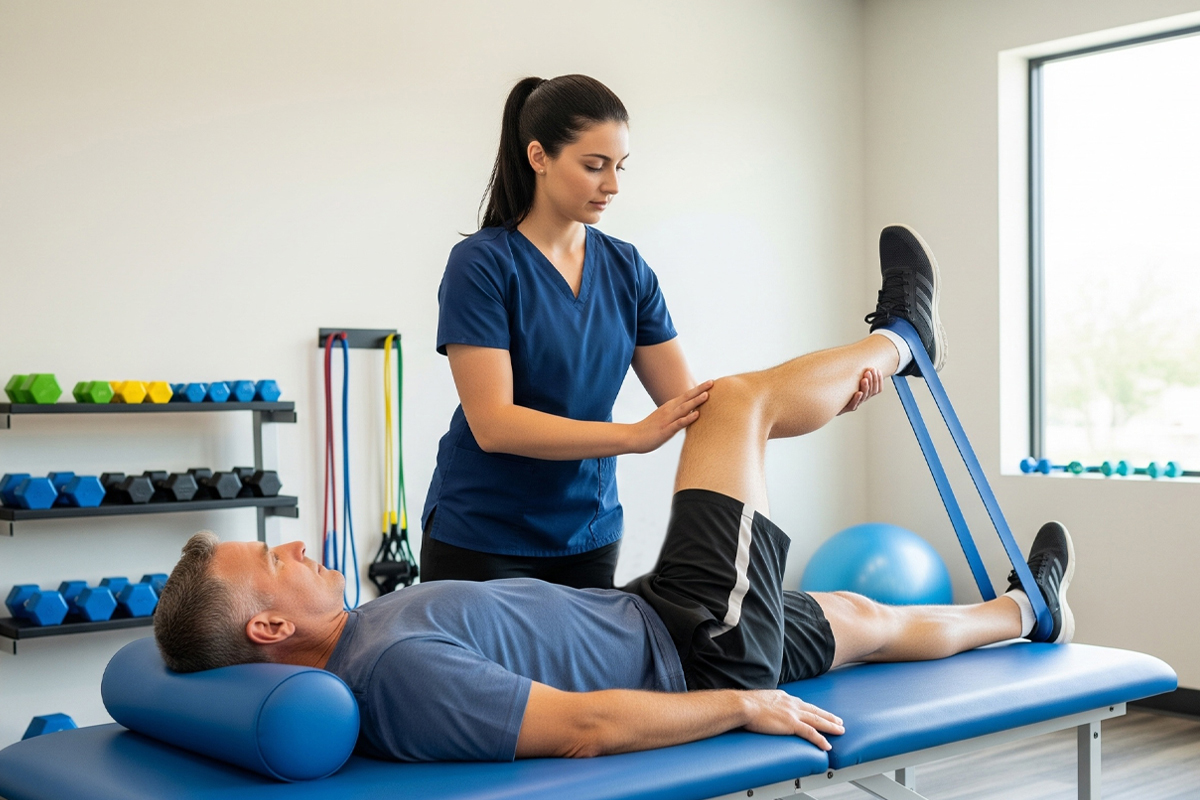
After orthopedic or joint surgery, your body needs guided movement, progressive strengthening, and careful monitoring. Rest alone is not enough.
A structured rehabilitation program helps:
• Restore Range of Motion: Gentle, controlled techniques prevent stiffness and promote safe mobility without compromising the surgical repair.
• Rebuild Strength: Muscles weaken quickly after surgery. Targeted strengthening restores stability, protects the joint, and supports daily activities like walking, climbing stairs, or lifting.
• Retrain Movement Patterns: Pain and injury often create compensations. Therapy corrects faulty movement patterns so your body functions as a coordinated system again.
• Shorten Overall Recovery Time: When therapy begins at the appropriate time and progresses properly, patients often return to work, exercise, and daily life sooner.
Rehabilitation is not just about healing. It’s about preventing setbacks.
Without proper therapy, patients may experience:
Persistent stiffness
Muscle atrophy
Scar tissue restrictions
Poor joint mechanics
Overcompensation that stresses other areas
Beyond immediate recovery, we also focus on long-term durability. Many injuries develop due to muscle imbalances, weakness, or faulty mechanics that build up over time. If those issues aren’t corrected, the risk of reinjury remains.
Our goal is not simply to get you back to where you were. It’s to help you return stronger, more balanced, and better protected against future injuries.
For athletes, rehabilitation is even more important.
Returning to daily activities pain-free is one milestone. Returning to competitive performance is another.
Athletes need:
Explosive strength
Agility and speed
Joint stability under high demand
Endurance
Sport-specific control
Pre-surgery therapy helps athletes maintain as much strength and conditioning as possible before their procedure.
After surgery, rehab progresses beyond basic recovery. It includes advanced strengthening, neuromuscular retraining, balance work, and sport-specific drills tailored to the demands of your activity. We also evaluate movement mechanics to ensure proper alignment and technique.
In addition to traditional post-surgical therapy, we offer specialized support for athletes through our Sports Rehabilitation programs, Blood Flow Restriction (BFR) Therapy, and Performance Training services. These advanced approaches help accelerate strength gains, maintain conditioning during recovery, and bridge the gap between rehabilitation and full return to sport.
The objective is not just a return to play. It is a return to sport without pain, with the strength and control necessary for high performance, and with the resilience to continue playing the sport you love.
It’s completely normal to worry about pain or causing further damage during therapy. Many patients hesitate because they fear they’ll “undo” the surgeon’s work.
When rehabilitation is administered by certified professionals like those at our clinic, that concern should not deter you.
Your program is:
Based on your specific surgical procedure
Coordinated with your surgeon’s protocol
Progressed carefully and intentionally
Adjusted in real time based on your response
Your First Visit
We begin with a comprehensive evaluation. We review your surgery or upcoming procedure, assess your strength and mobility, and discuss your goals.
From there, we design a personalized plan that fits your condition, your lifestyle, and your timeline.
During Your Sessions
Treatment may include:
Manual therapy
Guided therapeutic exercises
Progressive strength training
Balance and coordination work
Functional retraining for daily or athletic activities
Some mild soreness can occur as your body adapts. That is normal. Sharp or concerning pain is not ignored. We monitor your progress closely to ensure the healing process stays safe and effective.
Because we collaborate with surgeons affiliated with institutions such as the Hospital for Special Surgery, Columbia Orthopedics, and NewYork-Presbyterian, your care does not happen in isolation.
We communicate when necessary, follow established post-operative protocols, and ensure your therapy aligns with your surgical plan. This team-based approach improves outcomes and provides peace of mind.
Whether you’re preparing for surgery or already on the road to recovery, the right rehabilitation plan can significantly influence your results.
Our clinic works with top orthopedic surgeons throughout New York and New Jersey. Together, we focus on restoring your strength, mobility, and confidence so you can return to your pre-injury condition safely and efficiently.
If you have an upcoming procedure or have recently undergone surgery, contact our clinic to review your care plan. We’ll coordinate with your surgeon and design a personalized program tailored to your goals.
Your recovery is a team effort. Let’s get you back to doing what you love.
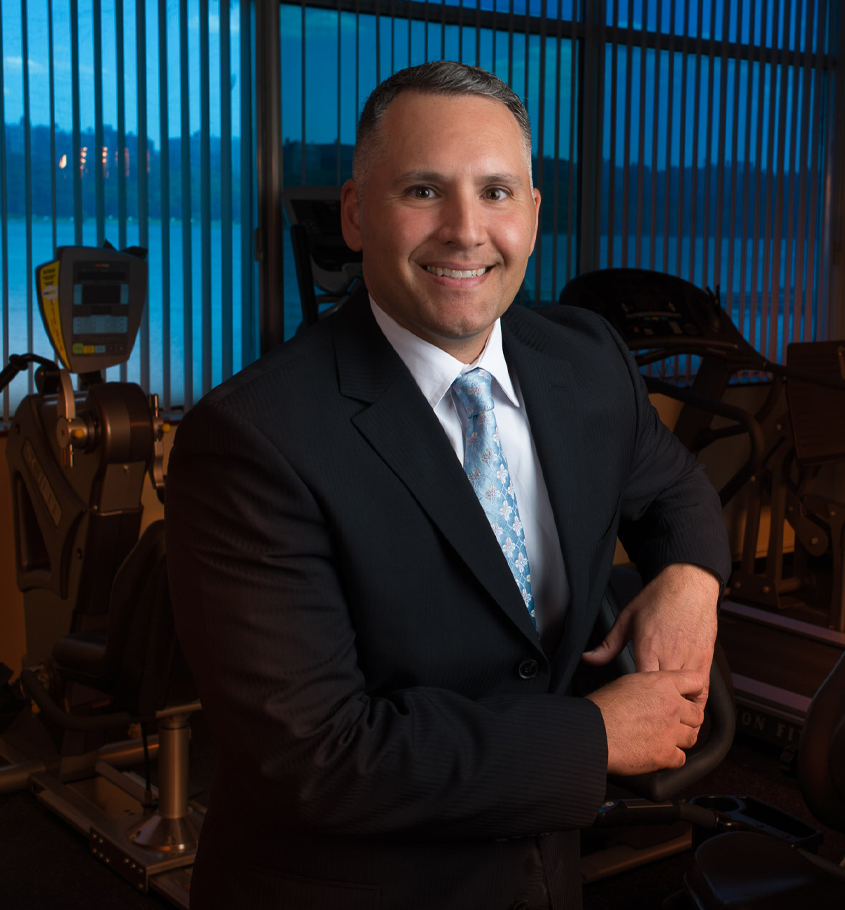 Dr. Frank J. Scerbo, PT, DPT, MS, CSCS, received his Master of Science in Physical Therapy from Columbia University and his Doctorate in Physical Therapy from The University of Medicine and Dentistry of New Jersey (now Rutgers University). He is a Certified Advanced Hip Clinician and Certified Overhead Athlete Specialist through the Hospital For Special Surgery. His specialty is in the area of adult and pediatric orthopedic physical therapy, with a particular interest in post-surgical rehabilitation. Dr. Scerbo is a member of the American Physical Therapy Association, the American College of Sports Medicine, and the National Strength and Conditioning Association. He is an adjunct Professor for the Kean University Physical Therapy Program. He has been on the advisory board for the Hospital for Special Surgery’s Rehabilitation Network for the past 10 years.
If you would like to book an appointment with Dr. Scerbo or any of our expert licensed physical therapists, please call us at (201) 941-2240 or use our convenient online appointment form.